Tara Himalayan Clouds, India 2025 (Team Peacock)
Tara Bedelian
My Story
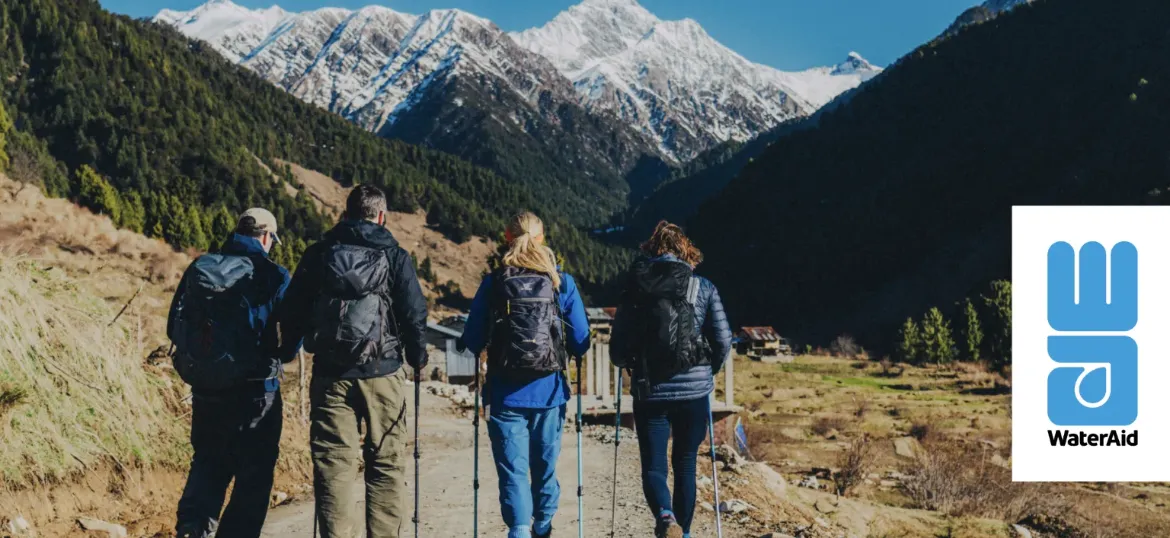
In April 2025 I'm travelling to the Himalayan foothills to take on a 5 day, 100km trekking challenge with a number of HSBC colleagues. This is quite a challenge with 7-9 hour trekking per day and up to 1000m elevation gain in a day. Together, we aim to raise over £150,000 for Water Aid, supporting a region that's already under water stress, and in particular the women and young people who are most affected by this.
With a large population, high levels of inequality and poverty and a unique geo-climatic condition, India is highly vulnerable to climate change. As a direct result of climate change, millions of Indians face exceptional water shortages in the summer months, while disasters induced by climate change curtail usability and sustainability of the water supply and sewerage infrastructure, affecting the quality of drinking water, and presenting an environmental risk and compromising access to essential services in the long run.
Bihar and Utter Pradesh are the third and first most populated states in India and both suffer water stress as a result of floods and pollution. Many inhabitants rely on handpumps for their water supply and it is typically women and girls who spend long durations travelling to collect water and queuing at overcrowded pumps. Access to water for sanitation and hygiene is an even more serious problem with inadequate sanitation and lack of sewage treatment further polluting the water sources.
The HSBC x WaterAid project in India aims to tackle these chronic issues to improve access to sustainable water, sanitation and hygiene (WASH).
The project has a focus on sustainability and the engagement and empowerment of women and young people.
On sustainability the project will focus on supporting ongoing operation and maintenance (O&M) of key WASH systems, developing key skills in the community to support O&M and undertaking behaviour change campaigns to embed improved practices linked to WASH.
Both women and young people will have key roles in the project, including leading the community engagement, assessments, developing water security plans, implementation, and monitoring.
Traditionally, women and young people have a limited or no role in development planning, whilst they experience the most significant burdens caused by climate change, so it is important to include these two groups in the project from the very beginning.
The project has 5 key aims:
- Strengthen and improve functionality of village water sanitation committee and governance institutions at village level.
- Improve source sustainability and rejuvenation of surface water bodies.
- Improve operation and maintenance (O&M)
- Undertake water quality testing.
- Undertake a behaviour change campaign through social art forms.
-
Target
£2,000
-
Raised so far
£2,265
-
Number of donors
98
My Story
In April 2025 I'm travelling to the Himalayan foothills to take on a 5 day, 100km trekking challenge with a number of HSBC colleagues. This is quite a challenge with 7-9 hour trekking per day and up to 1000m elevation gain in a day. Together, we aim to raise over £150,000 for Water Aid, supporting a region that's already under water stress, and in particular the women and young people who are most affected by this.
With a large population, high levels of inequality and poverty and a unique geo-climatic condition, India is highly vulnerable to climate change. As a direct result of climate change, millions of Indians face exceptional water shortages in the summer months, while disasters induced by climate change curtail usability and sustainability of the water supply and sewerage infrastructure, affecting the quality of drinking water, and presenting an environmental risk and compromising access to essential services in the long run.
Bihar and Utter Pradesh are the third and first most populated states in India and both suffer water stress as a result of floods and pollution. Many inhabitants rely on handpumps for their water supply and it is typically women and girls who spend long durations travelling to collect water and queuing at overcrowded pumps. Access to water for sanitation and hygiene is an even more serious problem with inadequate sanitation and lack of sewage treatment further polluting the water sources.
The HSBC x WaterAid project in India aims to tackle these chronic issues to improve access to sustainable water, sanitation and hygiene (WASH).
The project has a focus on sustainability and the engagement and empowerment of women and young people.
On sustainability the project will focus on supporting ongoing operation and maintenance (O&M) of key WASH systems, developing key skills in the community to support O&M and undertaking behaviour change campaigns to embed improved practices linked to WASH.
Both women and young people will have key roles in the project, including leading the community engagement, assessments, developing water security plans, implementation, and monitoring.
Traditionally, women and young people have a limited or no role in development planning, whilst they experience the most significant burdens caused by climate change, so it is important to include these two groups in the project from the very beginning.
The project has 5 key aims:
- Strengthen and improve functionality of village water sanitation committee and governance institutions at village level.
- Improve source sustainability and rejuvenation of surface water bodies.
- Improve operation and maintenance (O&M)
- Undertake water quality testing.
- Undertake a behaviour change campaign through social art forms.